

2026 Pokémon Rotation: What We Lose and Best Pokémon Decks to Play in the New Format



The scariest moment of the year is coming… and not, I am not referring to Halloween. The 2026 Pokémon TCG Rotation is official and will take place on April 10th. While some players are celebrating the arrival of a new format, others are still looking at their albums with tears in their eyes, trying to process the fact that decks they’ve played for years, such as Gardevoir or Charizard ex, will no longer be legal in a Pokémon game.
It doesn’t matter if you are for or against the rotation mechanic; the reality is that it is the biggest event we have in the calendar, one that completely reshapes how the game is approached. And whether you admit it or not, everyone is worried about the unknown. How will current strategies adapt? Do I need to buy a new deck? What will be the next staple cards I need to get?
Well, worry not, because if you have faced any of these questions, this is the right article for you! We will explain all you need to know about the rotation, what it means for the metagame, and, most importantly, what the best post-rotation decks are.
What is the rotation in Pokémon TCG?
Let’s start with the basics. The rotation is a system that you can find in some other Trading Card Games, by which a certain number of cards stop being tournament legal. The idea behind it is quite simple: keep the metagame fresh by constantly evolving it.
Let’s face it, we all know some tier S decks keep winning no matter what happens. Let’s take Gardevoir ex, for example, a deck that has access to infinite energies during the game. Since the moment this card was released, more than two years ago, it has always been one of the strongest choices for tournaments. Not only did it get a second and a first place finish in Worlds 2023 and 2025 respectively - according to recent data, it is also the most successful deck in history if we look at the amount of monetary prizes it has earned.
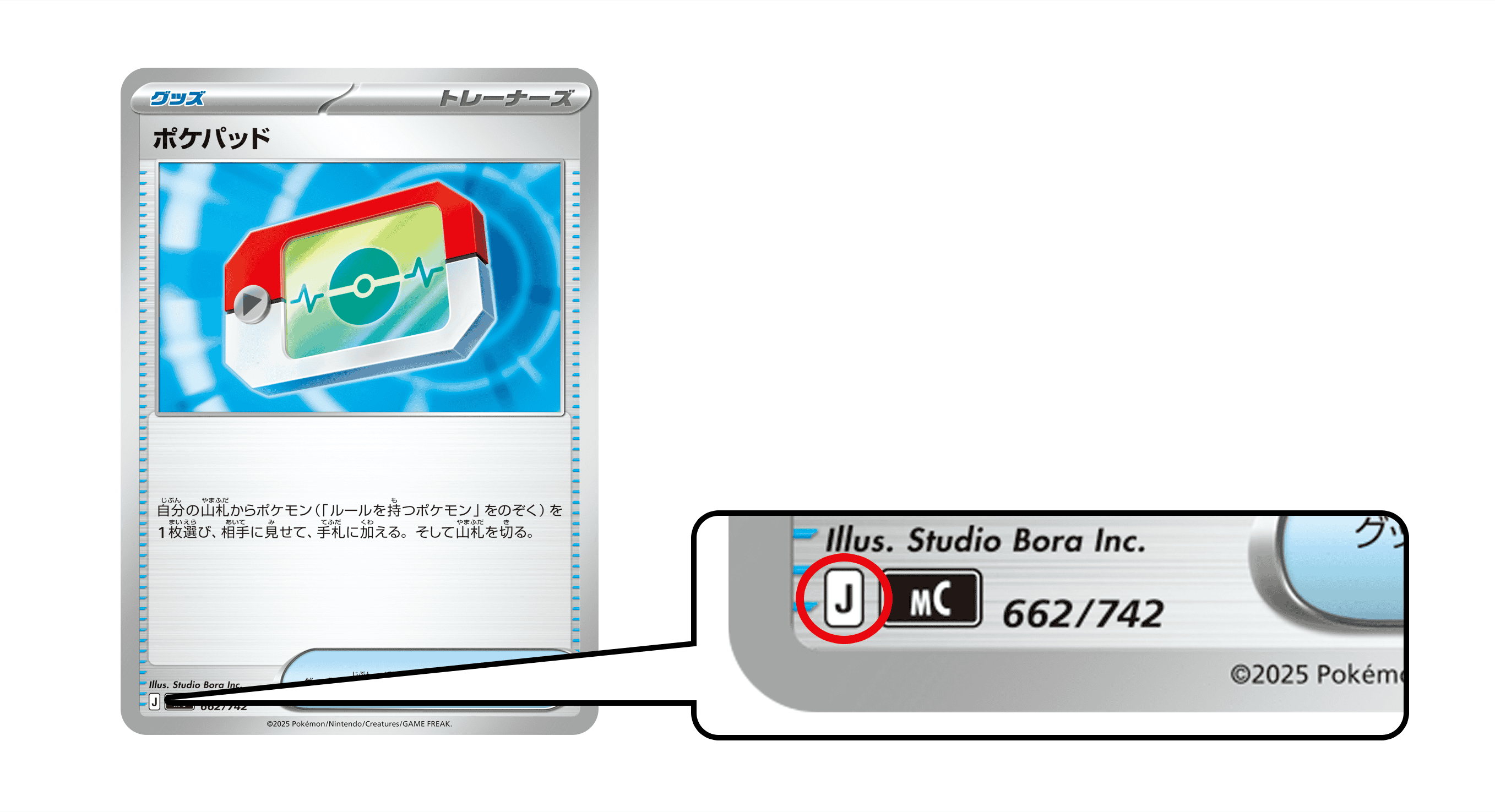
Considering that Pokémon doesn’t have a banlist, players have two choices to navigate the situation: wait for Pokémon to print a counter (which does not happen very often) or wait a couple of years until the card is hit by the rotation. In the Pokémon TCG sphere, the rotation takes away cards from the oldest expansions unless they have been recently reprinted. A couple of years ago, understanding the rotation was a bit trickier, but it was decided to simplify everything by introducing a “block” system. Each card is printed with a letter at the bottom and each letter belongs to a “block”. Instead of rotating by expansions, the cards now rotate by blocks.
For the 2026 season, for example, cards belonging to the “G” block will no longer be legal. In other words, your deck will need to contain cards with the H, I, J, and any other mark that is printed afterwards (yes, they go in alphabetical order, as you see). If you want to learn more, I invite you to check this article to find all the information.
What cards do we lose in this year’s rotation?
I’ve been playing Pokémon for +15 years and I can tell you that this is one of the most extreme rotations I can remember. Not only because of the the cards we lose (I think this is the time when we lose the highest number of cards!) but also because of how important these resources were.
Let’s first start by talking about decks that will be no more. There are entire strategies that simply won’t be able to survive the rotation as the entire core of the deck rotates. We have many examples in this category, but there are three decks that will truly be missed: Gardevoir, Charizard, and Gholdengo ex.
These three decks had been performing incredibly well over the last couple of seasons, and if you actually take some time to look at the stats, you will see that, on average, they represented around 30% of the total metashare. This picture is from the International European Championship, the biggest tournament to date.
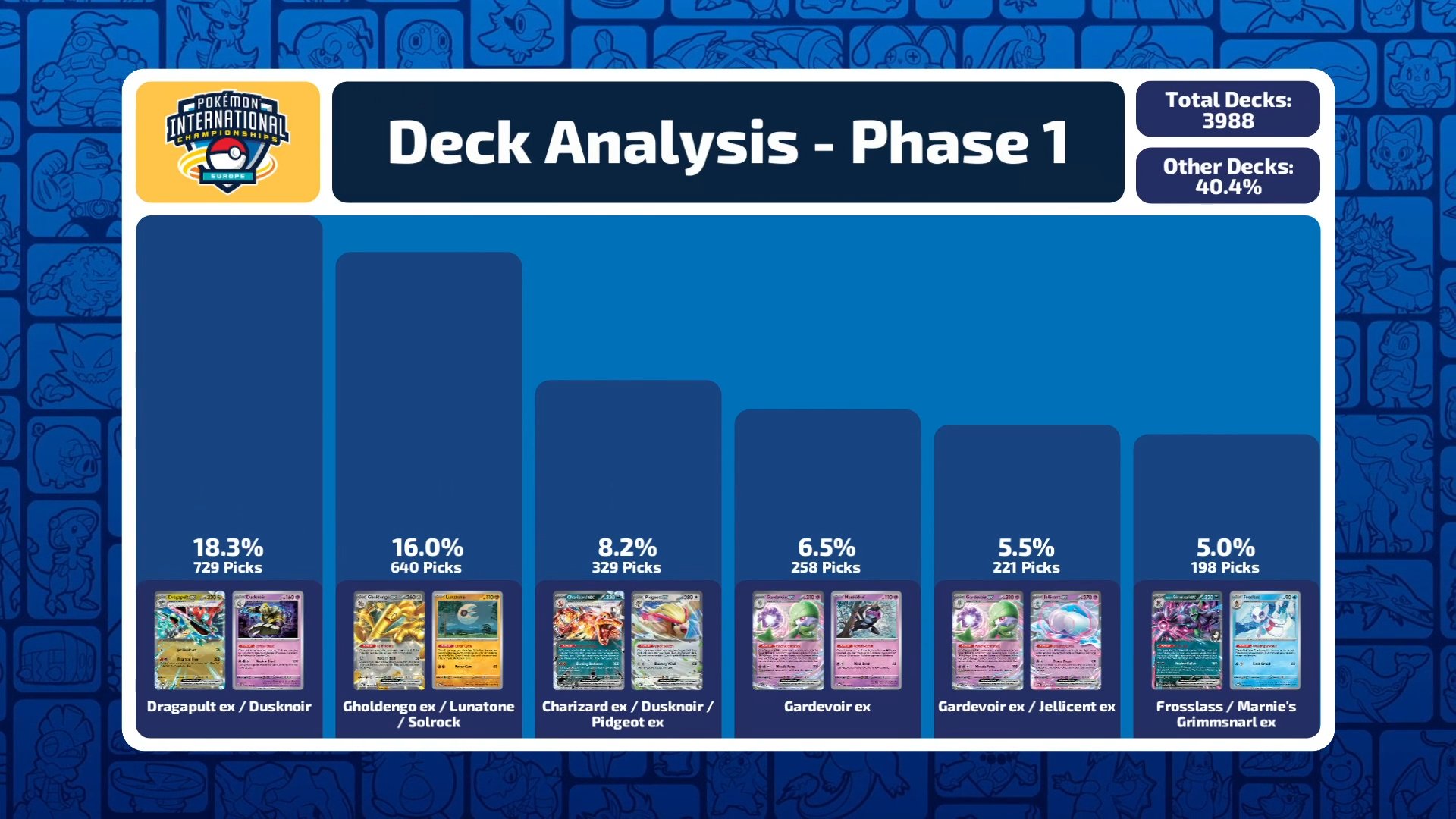
The fact that these decks are going to rotate does not only mean that other decks like Dragapult ex would be played more, but we will see a lot of contenders suddenly becoming relevant. Let me explain this better. When a deck is a popular tournament choice, many players immediately discard strategies that might have a bad match-up against it because they just don’t want to risk facing a popular autoloss.
Gardevoir and its army of psychic-type friends were one of the most consistent choices, and therefore, it made Mega Lucario ex (which is weak to Psychic) a very dangerous pick. Sure, you could beat a lot of other decks, but it only took 2 unlucky rounds against Gardevoir to have a bad tournament run. In other words, Gardevoir’s dominance was gatekeeping Mega Lucario. But now that Gardevoir ex is no longer in the format, maybe Lucario finally has the chance to prove its value.
But apart from Charizard and the others, the decks that will still remain with us take a hard blow, no matter who they are. Why? Well, because some of the most popular widespread cards are part of the G block and did not receive a reprint. This is going to significantly impact the way decks can set up and find their pieces throughout the game.
As I said, this is the rotation with the most card losses, and it will be impossible to go over all of them, so allow me to just highlight the ones that really, really hurt the most.
- Searchers & consistency cards: The best cards in (most) card games are those that can help to search for your pieces effortlessly. Nest Ball was the most generic and cost-efficient way of getting basic Pokémon, which led it to be a staple in basically every deck. Doing a similar function, we had Artazon, although it was a bit less played because, being a Stadium card, your opponent could also benefit from it. And last but not least, Aven and its capability of searching for two cards was the backbone of multiple decks in the format. In fact, I would say that it was the best opener in the game, grabbing Preciuos Trolley and a Technical Machine (typically Evolution or Turbo Energize) to effectively get your field ready for the game.
- Comeback enablers: Here, I am referring to cards you typically run to turn the tables in your favor when you are in a difficult position, which is something that, in my opinion, all trading card games should have. In this category, we are really going to miss Counter Catcher, a gust effect at no cost, and Reversal Energy, which was very useful for certain decks like Zoroark variants w/ Darmanitan.
- Resource recovery: Prof. Turo and Penny were a bit of a niche supporter cards that allowed putting our Pokémon back into our hand, avoiding difficult situations, and even restarting the prize trade. But I think the one I am going to miss the most is Super Rod. Yes, sure, we still have access to Rescue Stretcher but the flexibility of getting a combination of energies and Pókemon cards back into our decks was extremely useful for certain decks.
- Iono: You really thought I was just going to forget Iono? Nope, I was saving it for the end! Iono has been such a pivotal card that it needed its own category. Some players might argue that Iono was not a big staple, since most decks “only” ran 2-3 copies. But the reality is that Iono served multiple purposes during a game, helping preserve resources in the early game and punishing your opponent in the late turns, all at once. To me, having Iono in the format was not only good but very necessary. Pokémon TCG is a game where accumulating resources in hand is very easy, and not having a generic way of taking these resources away can lead to checkmate scenarios right from the start.



What will the next format look like?
If we consider the nature of the cards we are losing, I think it is pretty clear where the format is heading and having these big changes in mind can easily give us an idea of what would be the decks you should consider playing and why.
- Less hand control: If we don’t have Iono, it will be very difficult to avoid aggressive decks getting all the resources they need. As such, I would imagine the format will leave less space for control strategies, and most decks will focus on winning the prize trade rather than attempting to disrupt plays.
- Less draw power: Professor Research, Iono, Squawkabilly ex… it will be very difficult to access all the resources you want in the first few turns. Except for a handful of decks, the early games will be a bit slower
- Less comeback potential: This is the part that scares me the most. I am a huge fan of comeback cards since they punish greedy plays. The only real “comeback” card we are left with is Unfair Stamp, and I have the feeling that it is going to be the Ace Spec of choice moving forward.
- Fewer setup options: Decks will need to dedicate more space to finding their basic Pokémon because Nest Ball is no longer an option. As such, heavy Basic Pokémon decks will either run a supporter like Brock, while evolution decks should have more consistency thanks to Buddy Buddy Poffin and Poké Pad.
Top contenders for the new Standard format
Honorable Mention: Alakazam
Before you punch your computer in rage after seeing that Alakazam is not part of the list, let me attempt to explain why a card that, on paper, is one of the strongest Pokémon ever released doesn’t make the cut. Spoiler: Alakazam is only going to be good as long as people don’t give it enough credit.
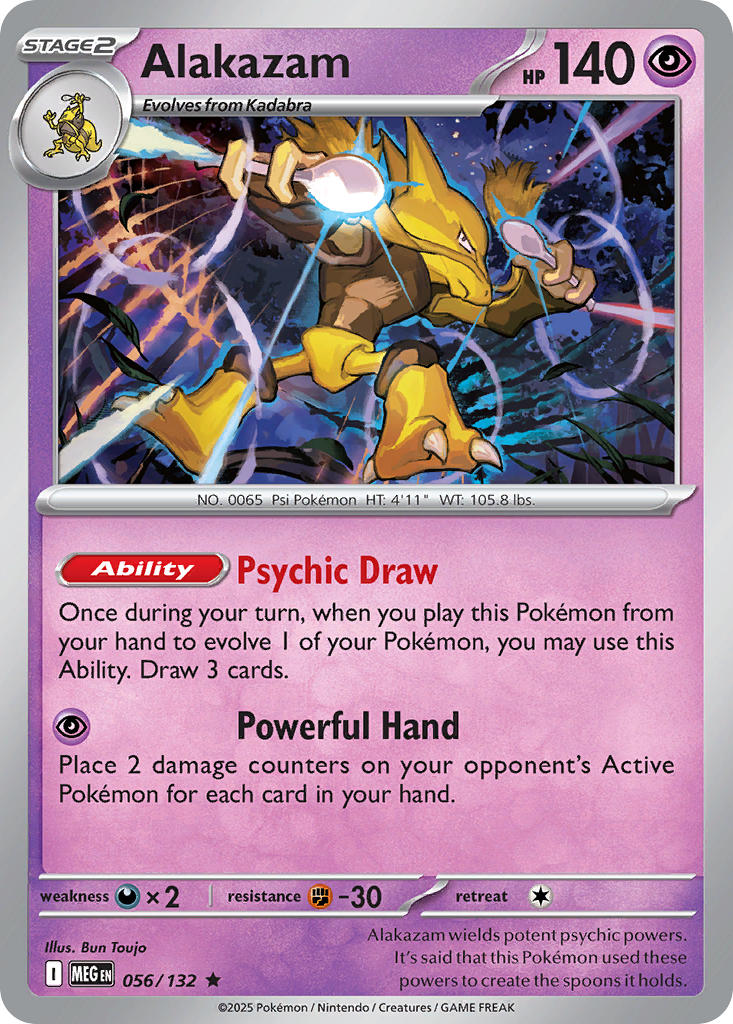
If we look at Alakazam, it should be very well-positioned not only to be an important part of the meta but to absolutely dominate it. The idea behind the deck is very simple: you accumulate a lot of cards in your hand, and you then proceed to KO pokémon after pokémon. In order to achieve this goal, the deck is more than prepared to draw +9 cards every turn thanks to the abilities of Kadabra, Alakazam, and Dudunsparce, among others. We have just explained that the new format will have less disruption than ever, so it should mean that Alakazam will be the deck to beat. Right?
Well, not really. See, Alakazam has a huge disadvantage: instead of dealing damage, it places damage counters. And, in case you’ve forgotten, some very popular cards can shield themselves from damage counters. So far, the most generic one was Mist Energy, but a well-timed Xerosic can have an equally devastating effect for Alakazam. And not to mention that Alakazam instant-loses against a Team Rocket’s Articuno.
At the end of the day, Alakazam is indeed a very powerful strategy but lacks flexibility or even the capability of teching against all its potential counters. As a result, Alakazam will easily win against anything that is not prepared to face Alakazam, but as soon as players decide that they’ve had enough, it won’t be able to overcome a field where two Team Rocket’s Articuno are sitting on the bench.

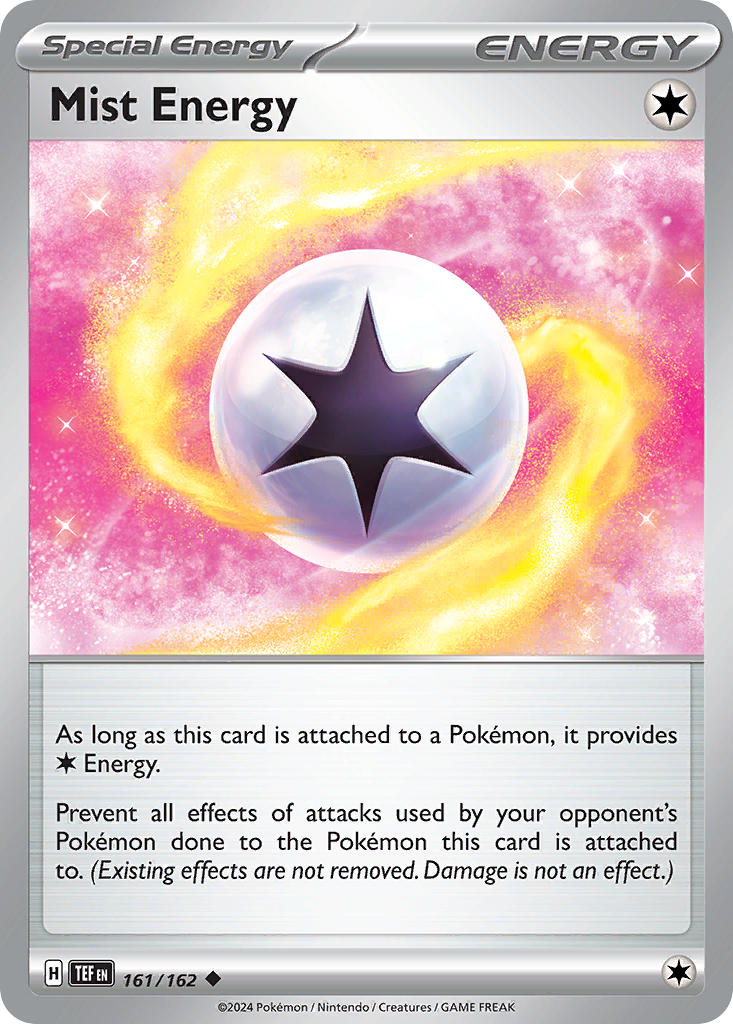
That is why I have the theory that Alakazam is going to be one of these decks that goes in waves. It will start very strongly, players will then dedicate a couple of cards in the deck to counter it, it will therefore disappear from the tournaments only to go back to the top spots as long as the counter cards stop seeing play.
But in any case, if you were looking for a good post-rotation Alakazam list, I am not going to disappoint you, so here you go!
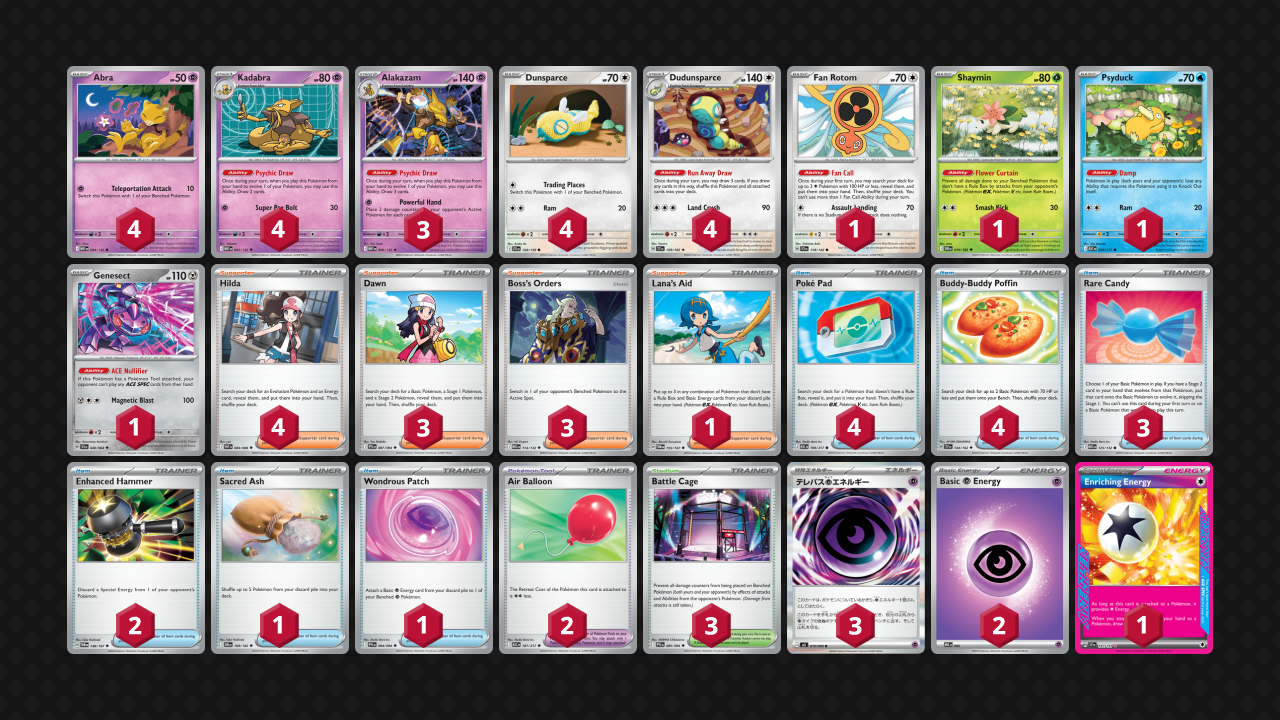
-
4Abra MEG 54
-
4Kadabra MEG 55
-
3Alakazam MEG 56
-
4Dunsparce JTG 120
-
4Dudunsparce TEF 129
-
1Fan Rotom SCR 118
-
1Shaymin DRI 10
-
1Psyduck ASC 39
-
1Genesect SFA 40
-
4Hilda WHT 84
-
3Dawn PFL 87
-
3Boss's Orders MEG 114
-
1Lana's Aid TWM 155
-
4Poké Pad ASC 198
-
4Buddy-Buddy Poffin TEF 144
-
3Rare Candy MEG 125
-
2Enhanced Hammer TWM 148
-
1Sacred Ash DRI 168
-
1Wondrous Patch PFL 94
-
2Air Balloon ASC 181
-
3Battle Cage PFL 85
-
3Telepath Psychic Energy M3 79
-
2Psychic Energy MEE 5
-
1Enriching Energy SSP 191
Dragapult
If you ask me, Dragapult has been the best deck of the format for the past year or so (Yes, I know Gardevoir is probably just as good, if not better, but come on, Dragapult attacks by launching other Pokémon like rockets, nothing is cooler than that!!) and I can only expect it to remain strong. The deck has indeed lost some important pieces (Hawlucha, Counter Catcher, and Iono are the ones that hurt the most) but the reality is that the Drapagult itself is such a powerful and independent attacker that can still decimate an entire field by spreading damage counters turn after turn.
Just as it happens in today’s Standard, there won’t be just one single way of playing Dragapult ex. In the current format, the most popular version combines Dragapult with a scary line (pun intended, because they are ghosts) of Dusclops and Dusknoir in order to take multiple prizes but there are other interesting variants. I think players will experiment for a while, but I have the feeling that a straight variant (with emphasis on energy acceleration and the healing of Munkidori) will eventually prevail.

Why the deck is a strong option:
- Dragapult’s Phantom Dive is one of the most powerful attacks ever printed, no doubt. Being capable of placing damage counters at will, it allows players to set up some strong checkmate situations. It is also incredibly effective against decks that focus on evolutions, targeting smaller Pokémon before they fully evolve.
- Darkloak is one of the strongest, if not the strongest, stage 1s in the format. One of the reasons Dragapult can always find the resources it needs is precisely its ability to Recon Directive several times during a turn. By picking between the top 2 cards from your deck, putting together the right combo pieces suddenly becomes easier. In an environment where we have fewer consistency cards than before, being able to see more cards during the games is just huge.
- Being a stage 2, Dragapult requires more time than other decks to properly set up but luckily for us, Budew can buy a couple of turns with its Itchy Pollen attack. With your opponent out of item cards, Dragapult can safely evolve, attach energies and then swing for damage.
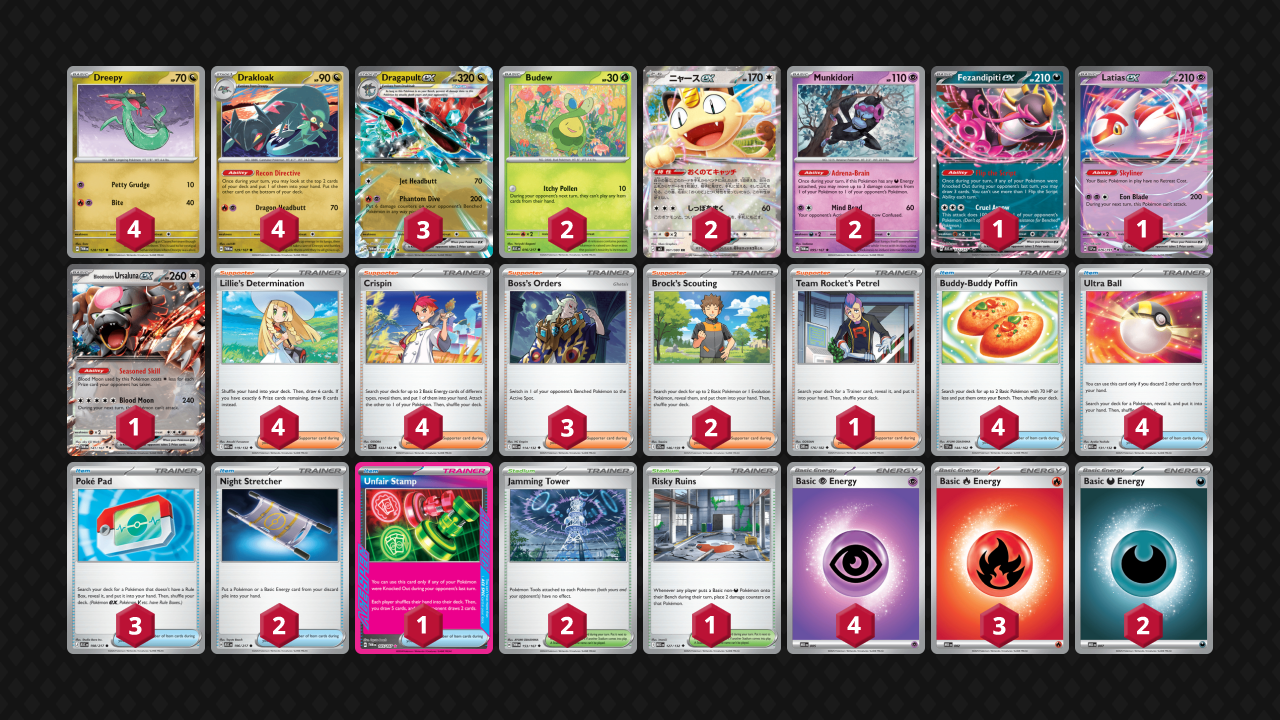
-
4Dreepy TWM 128
-
4Drakloak TWM 129
-
3Dragapult ex TWM 130
-
2Duskull PRE 35
-
1Dusclops PRE 36
-
1Dusknoir PRE 37
-
2Budew ASC 16
-
2Meowth ex M3 61
-
1Hoothoot SCR 114
-
1Noctowl SCR 115
-
1Munkidori TWM 95
-
1Fezandipiti ex ASC 142
-
4Lillie's Determination MEG 119
-
2Boss's Orders MEG 114
-
1Crispin SCR 133
-
1Briar SCR 132
-
1Rosa's Encouragement M3 75
-
4Buddy-Buddy Poffin TEF 144
-
4Ultra Ball MEG 131
-
4Poké Pad ASC 198
-
3Rare Candy MEG 125
-
2Night Stretcher ASC 196
-
1Unfair Stamp TWM 165
-
1Jamming Tower TWM 153
-
1Risky Ruins MEG 127
-
3Psychic Energy MEE 5
-
3Fire Energy MEE 2
-
2Darkness Energy MEE 7
7th Place Champions League Fukuoka - Yuki Ito
Mega Lucario
Mega Lucario has all the ingredients to shine in this new format. The reason why it didn’t stand a chance in the previous one, we all know, was Gardevoir ex. With Gardevoir gone, Lucario might finally be able to become a strong contender. If you are looking for an aggressive strategy that can finish the game in just a couple of attacks, Mega Lucario is definitely the best deck choice. The only downside? Lillie’s Cleffairy might become a very popular card, so you will need to find a way to avoid getting two Mega Lucario in play and losing in two turns.

Why the deck is a strong option:
- Gust, Gust and more Gust. Lucario is a deck that has more copies of Boss’s Orders than most of the other strategies, thanks to the inclusion of Hariyama, which is perfect for such an aggressive style.
- Mega Lucario is a very complete card on its own. Its first attack, Aura Jab, allows it to power up any other attacker in the field, ensuring you always have a second copy of Mega Lucario ready by the time the first one has been knocked out. However, perhaps, Mega Brave is the movement your opponent needs to be afraid of. 270 damage for two energies is already scary, but if you combine it with the right damage modifiers (Power Pro or Maximum Belt), Lucario can easily 1HKO most of the other Mega Evolutions in the format, including the likes of Meganium or even Venusaur.

-
4Riolu MEG 76
-
3Mega Lucario ex MEG 77
-
3Solrock MEG 75
-
2Lunatone MEG 74
-
2Makuhita MEG 72
-
2Hariyama MEG 73
-
1Meowth ex M3 61
-
4Lillie's Determination MEG 119
-
2Judge DRI 167
-
2Boss's Orders MEG 114
-
2Wally's Compassion MEG 132
-
4Ultra Ball MEG 131
-
3Fighting Gong MEG 116
-
4Premium Power Pro MEG 124
-
3Poké Pad ASC 198
-
2Switch MEG 130
-
1Air Balloon ASC 181
-
1Maximum Belt TEF 154
-
2Gravity Mountain SSP 177
-
10Fighting Energy MEE 6
-
2Rock Fighting Energy M3 80
16th Place Champions League Fukuoka - Kairu Ishii
Big Basics Toolbox
I know this is probably not the official name for the deck, but I refuse to call it in another way. You could argue that this is an “Absol Box” or “Absol/Kangas/Ogerpon” deck but the reality is that, in simple terms, this is a strategy that focuses on two main pillars: Basic Pokémon and energy acceleration, nothing else and nothing more. In the past, we’ve also had decks that relied heavily on big non-evolved Pokémon (Landours ex in 2014, anyone?) to exert a lot of pressure from turn 1 and they were called Bid Basics decks, so I wondered, why not recycle the name?
What you want to do with this deck is very straightforward. You will always have a Mega Kangaskhan ex in your active position to get access to your resources and then, depending on the matchup, you will want to attack with one of your Pokémon or another. If you are going against something weak to grass, Teal Mask Ogerpon is of course the play. Mega Lucario and Dragapult, you say? Don’t worry, Cleffairy has you covered. And if you really don’t care about type advantage, Mega Absol is ideal to leave your opponent without resources.

Why the deck is a strong option:
- Absol + Unfair Stamp = GG. Remember that one of the reasons Mega Alsol is one of the strongest Mega Evolution Pokémon in the game is because of its attack Claw of Drakness, allowing us to check our opponent’s hand and discard anything we want. In a format where Unfair Stamp leaves our opponents with just 2 cards, using Claw of Darkness basically means your opponent is in topdeck mode from that turn onwards. A very, very difficult situation to come back from.
- As I just explained, the beauty of the deck is that you can have a really good attacker depending on the situation. Playing with the type advantage is always great, and being able to hit for weakness, leveraging Fighting, Grass, Psychic and Dark is incredibly decisive, considering you are always going to be getting between 2 or 3 prize cards with each attack.

-
3Munkidori TWM 95
-
2Mega Absol ex MEG 86
-
2Mega Kangaskhan ex MEG 104
-
2Teal Mask Ogerpon ex TWM 25
-
2Latias ex SSP 76
-
2Meowth ex M3 61
-
1Lillie's Clefairy ex JTG 56
-
1Bloodmoon Ursaluna ex TWM 141
-
1Psyduck ASC 39
-
1Fezandipiti ex ASC 142
-
1Cornerstone Mask Ogerpon ex TWM 112
-
3Cyrano SSP 170
-
3Crispin SCR 133
-
3Boss's Orders MEG 114
-
2Brock's Scouting JTG 146
-
2Ciphermaniac's Codebreaking TEF 145
-
1Lillie's Determination MEG 119
-
4Ultra Ball MEG 131
-
4Energy Switch MEG 115
-
2Night Stretcher ASC 196
-
1Pokégear 3.0 SVI 186
-
1Unfair Stamp TWM 165
-
3Area Zero Underdepths SCR 131
-
4Darkness Energy MEE 7
-
4Grass Energy MEE 1
-
2Psychic Energy MEE 5
-
2Mist Energy TEF 161
-
1Fighting Energy MEE 6
1st Place Champions League Fukuoka - Takato Nogamida

But maybe you don’t really like playing Mega Absol since it gives 3 prize cards when it falls in battle. Maybe you want to be even more aggressive and leverage other types of attackers. Well, this won’t be a problem, I assure you. These types of Big Basic box decks can easily adapt and include other cards that can offer different game routes.
For example, Wellspring Mask Ogerpong can pressure your opponent's Pokémon, targeting their low-HP basic Pokémon before they evolve so I am leaving you here with another equally strong variant. From a personal point of view, I think the Mega Absol version is slightly superior because of the control element but you can safely play both and expect great results.

-
3Teal Mask Ogerpon ex TWM 25
-
1Lillie's Clefairy ex JTG 56
-
2Wellspring Mask Ogerpon ex TWM 64
-
2Mega Kangaskhan ex MEG 104
-
2Latias ex SSP 76
-
2Meowth ex M3 61
-
1Fezandipiti ex ASC 142
-
1Psyduck ASC 39
-
4Cyrano SSP 170
-
4Crispin SCR 133
-
2Boss's Orders MEG 114
-
1Black Belt's Training JTG 143
-
1Ciphermaniac's Codebreaking TEF 145
-
1Briar SCR 132
-
4Energy Switch MEG 115
-
4Pokégear 3.0 SVI 186
-
4Ultra Ball MEG 131
-
1Unfair Stamp TWM 165
-
1Night Stretcher ASC 196
-
2Area Zero Underdepths SCR 131
-
8Grass Energy MEE 1
-
3Psychic Energy MEE 5
-
1Water Energy MEE 3
-
1Mist Energy TEF 161
12th Place Champions League Fukuoka - Hinata Tsukiyama
Raging Bolt
What can I say about Raging Bolt? It is a card that has evolved and adapted, no matter the format. When it was first released, it used to be just a high attack Pokémon but with all the new expansions, it has now acquired a flexibility that, from my point of view, makes it one of the decks to keep on your radar.
Raging Bolt still retains what makes him strong (the capability of discarding energies to deal incredible damage) but now is more of a toolbox deck than just a one-trick pony.
Why the deck is a strong option:
- In a meta where Mega Evolutions are going to become more and more popular, Raging Bolt is one of the few attackers that still can easily sweep for 400 damage turn after turn. Play Glass trumpet, Crispin, a couple of Ogerpon’s abilities, and there you go, enough to KO even a Mega Venusaur in just one attack.
- Crispin and Energy Switch basically mean you can power up whatever attacker you want without breaking a sweat. While Raging Bolt and Terapagos can’t hit for weakness, Lillie’s Cleffairy and Ogerpon ex can, becoming immediate threats to other popular Pokémon like Zoroark, Dragapult or Mega Lucario ex.
- Who-who ordered some cards? (Sorry, this was funny in my head.) In a format where searching options are scarce, being able to access the resources you want the moment you want is really, really powerful. Noctowl gives Raging Bolt players the most consistent way of finding the play they need. Do you need a combination of energies? Don’t worry, here is Crispin and Glass Trumpet. Oh, you need to go after something on the bench? Well, here is your Boss’s Orders. A Mega Lucario on the opposing field, you say? Please take this Ultra Ball and a Crispin to power up your Clefairy in one turn!

-
4Teal Mask Ogerpon ex TWM 25
-
3Hoothoot SCR 114
-
3Noctowl SCR 115
-
2Raging Bolt ex TEF 123
-
2Lillie's Clefairy ex JTG 56
-
2Fan Rotom SCR 118
-
1Iron Leaves ex TEF 25
-
1Raging Bolt SCR 111
-
1Latias ex SSP 76
-
1Fezandipiti ex ASC 142
-
1Terapagos ex SCR 128
-
4Crispin SCR 133
-
1Lillie's Determination MEG 119
-
1Boss's Orders MEG 114
-
4Ultra Ball MEG 131
-
4Poké Pad ASC 198
-
2Tera Orb SSP 189
-
2Glass Trumpet SCR 135
-
1Night Stretcher ASC 196
-
1Energy Retrieval SVI 171
-
1Energy Search SVI 172
-
1Energy Switch MEG 115
-
1Unfair Stamp TWM 165
-
3Area Zero Underdepths SCR 131
-
1Jamming Tower TWM 153
-
6Grass Energy MEE 1
-
2Lightning Energy MEE 4
-
2Fighting Energy MEE 6
-
2Psychic Energy MEE 5
4th Place Champions League Fukuoka - Akihiro Urata
Final Thoughts
Before we conclude this article, there is something very important I want to highlight. Every rotation brings a huge amount of changes to the Standard format and while we can theorize what will be played, no one has the secret recipe for the best next deck. What we have seen in Japan, coupled with the cards that we lost can give us, however, a very strong starting point. I’ve tried to explain what the new format is going to look like and why I think strategies that used to be overlooked can now become the next tier 1.
It will take a while until decks are properly refined and players find the perfect 60 cards, so use this time wisely to experiment and always try to focus on consistency over meta countering. I really hope you enjoyed this article and thanks for reading!