

Riftbound: Three Concepts to Master to Become a Better Player



If you struggle to become your local Nexus Night Master, here are three things you can improve on in the Riftbound Trading Card Game!
Tempo & Timing
Riftbound is a turn-based trading card game in which you need to conquer or hold Battlefields to score eight points to win your game. In doing so, we need to understand the increments we want to increase them. Either we conquer both Battlefields in a single turn by starting a Showdown in each of them and winning them by having more Might than our opposing player, or conquer one and hold it until our next turn.
Increasing our Victory points in increments of two each turn is crucial. We want to take the shortest route to victory. In doing so, both players will play Units, and how we use them can take us to victory. In a tempo play, we want to control the pace of the game, keep momentum, and use our resources in the form of Runes and cards on the Battlefield and in our hand efficiently.
We would rather have our opponent respond to our game rather than the other way around. To first understand what the meaning of tempo is, here are some key aspects of it:
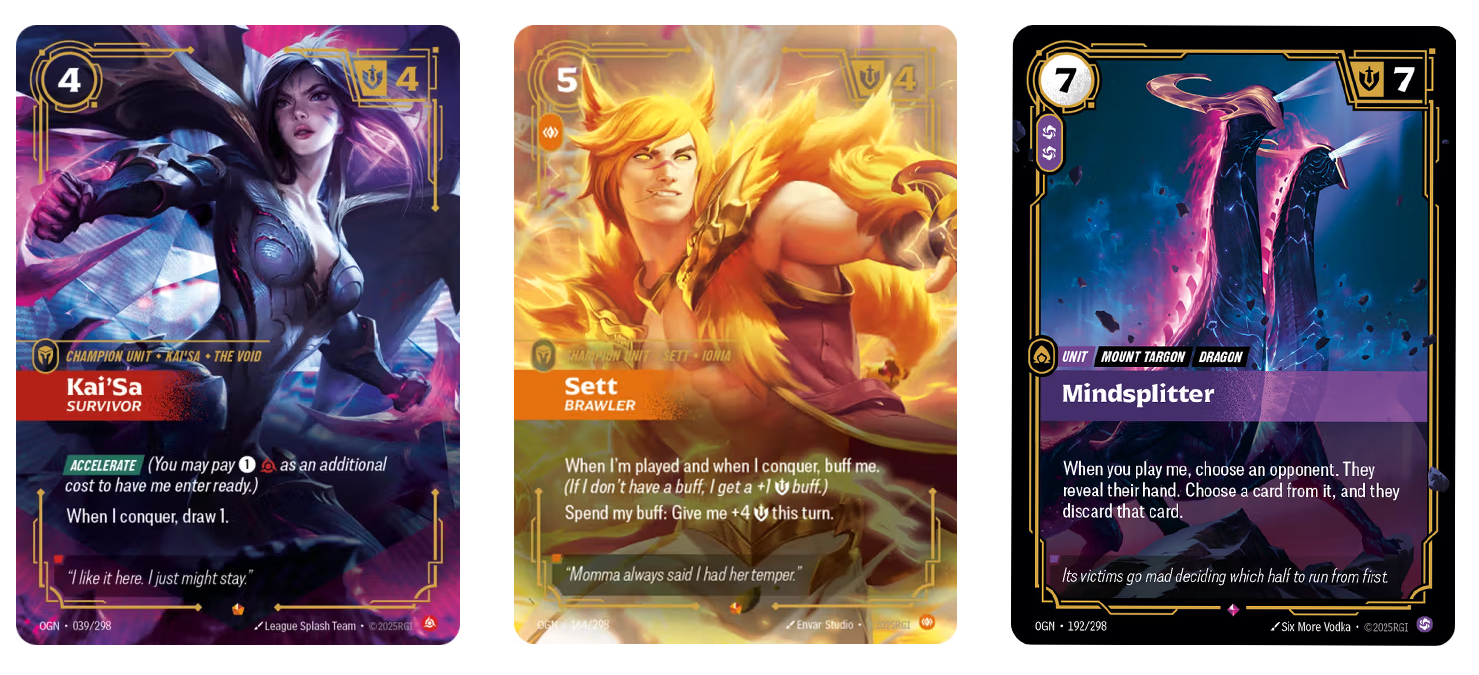
Board Presence: This is often defined as having more or more powerful Units on the field compared to your opponent.
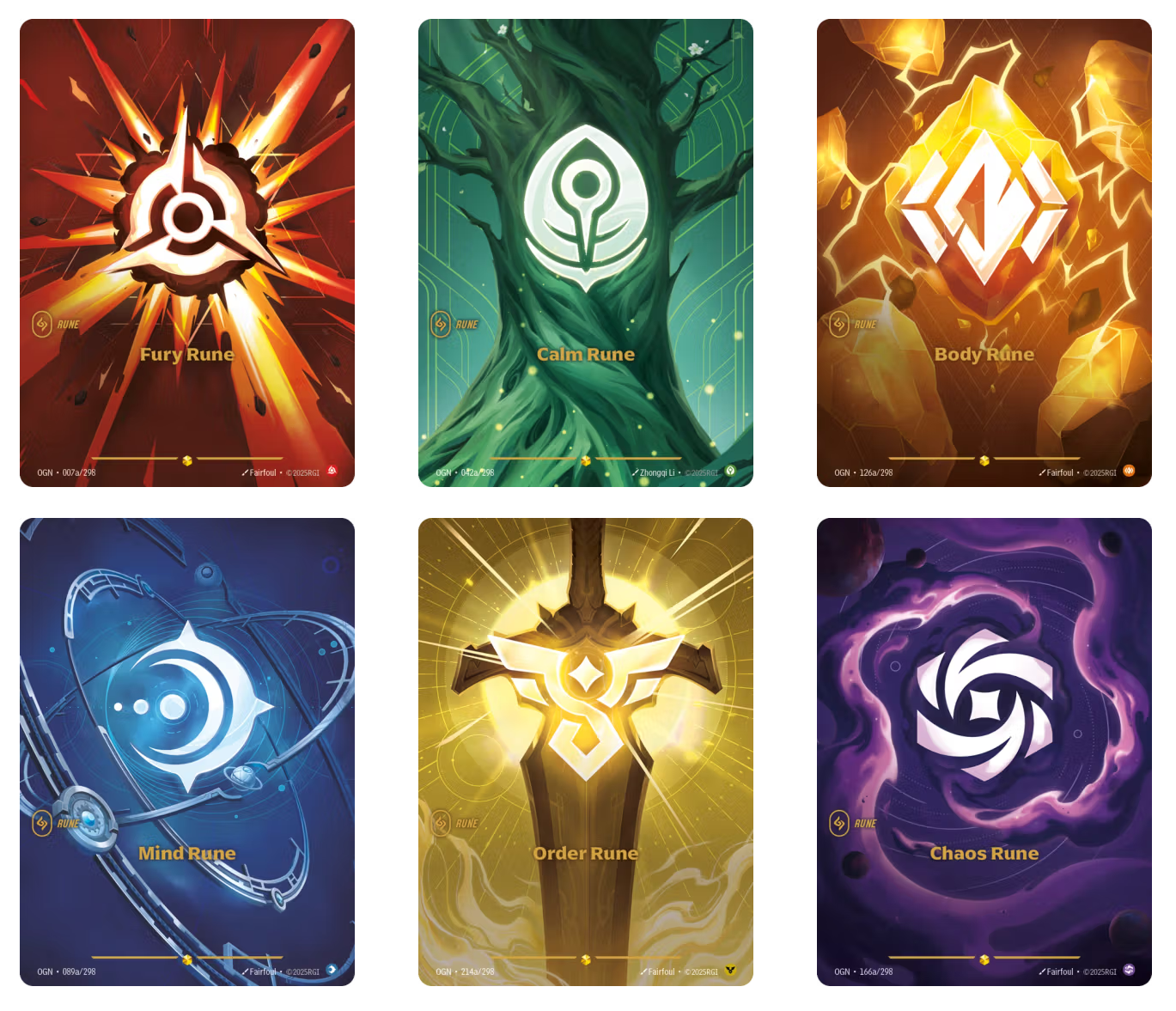
Resource Management: Maximize the use of available resources each turn to play our Units or Spells, but sometimes keep some to threaten actions during your opponent’s turn. But keep in mind this is when you have already established a board presence.
Tempo vs. Value: What is the difference between these two? Tempo gives you a short-term advantage on the board, which will diminish slowly over the course of the game, while value provides long-term advantage, like drawing more cards. Keep in mind you can still lose a game and have 10 cards in hand. These do nothing when you only provide value in your games and don’t focus on tempo from time to time.
Now that we have talked about the definition of it, how do we gain tempo?
- We can apply pressure and force our opponent into a defensive state. We create a problem our opponent has to resolve. Put as much Might as we can on a Battlefield or provide enough Might in our base so that our opponent can’t defend it if they pass their turn.
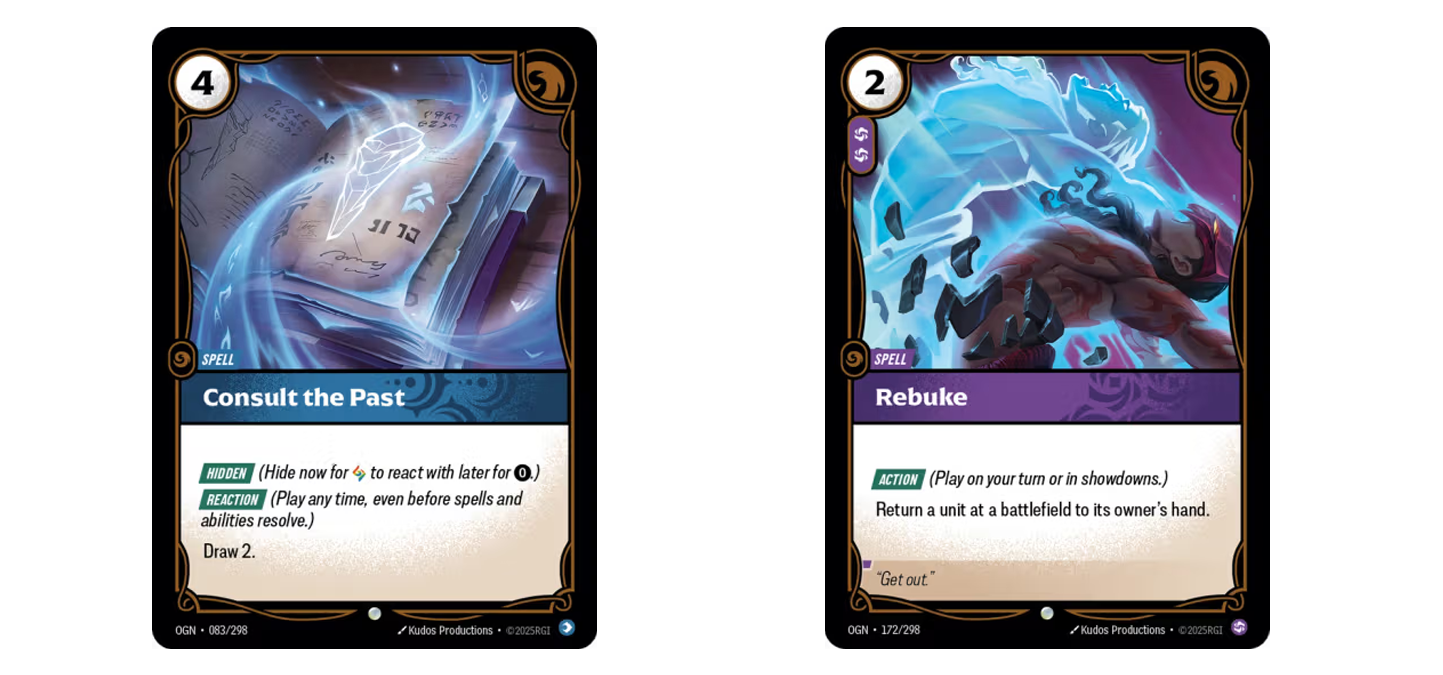
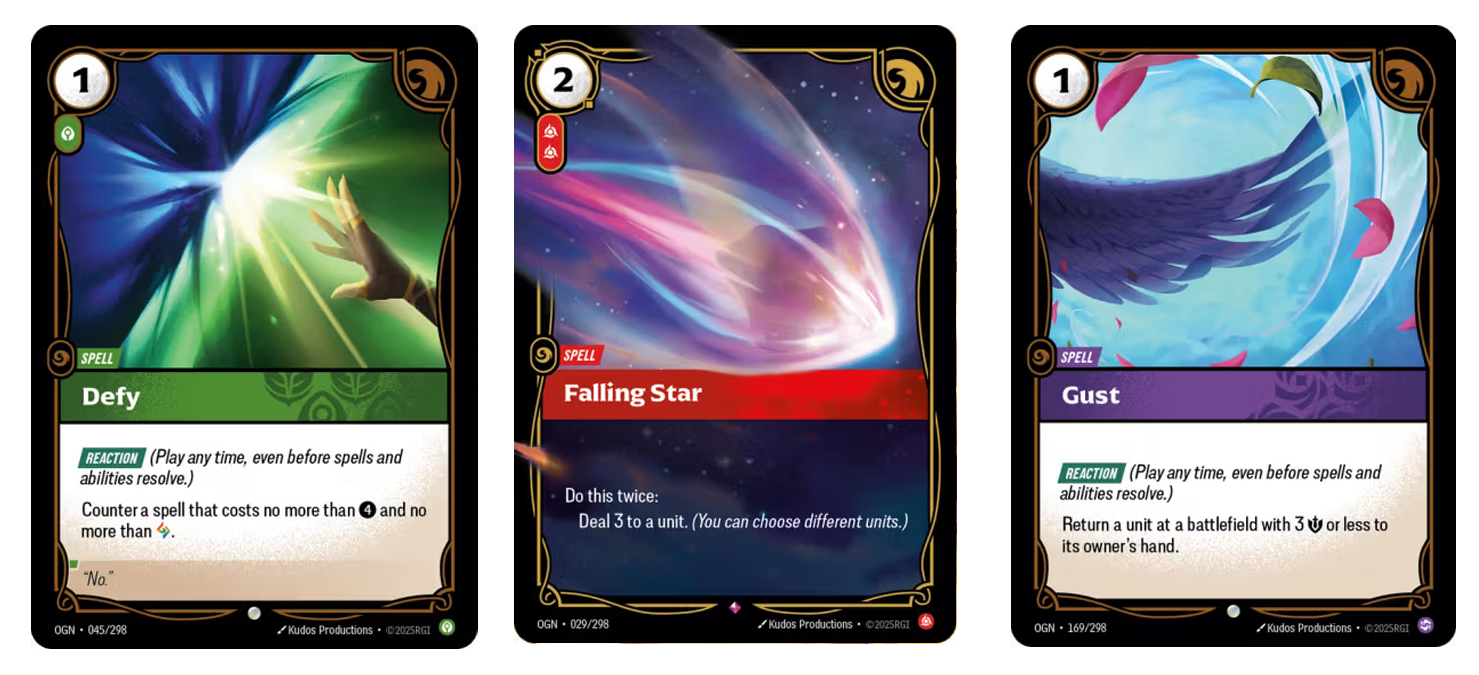
- We disrupt them. Counterspells, removal, or bounce are ways to get our opponent off guard, and they have to spend more Runes to play the Might they just presented.
- Play your curve. Ensure your deck is built in a way that allows cards to be played on their respective curve to maximize their efficiency. Keep in mind sometimes not drawing the card you wanted to play at a certain point in a game happens, but if you build your deck right, it will most of the time do what you want it to do.
Resource Management
Already mentioned as an aspect of tempo, resource management is its own topic. It’s important that we use all our energy, if possible, each turn, either producing Might or removing Might from our opponent’s field. While doing so, there are different parts of the field that can be considered resources. These are:
- Battlefields
- The number of cards in your hand
- Your discard pile
While receiving 2 Runes per round and being aware of power use, we have to consider Battlefield effects and can use them to our advantage. We have cards in our hand and want to use them. Losing a game with a lot of cards in hand is a waste of resources we missed while playing the game.
Also, your discard pile is a resource. Every card you played is in there, and it is pure information about what you have left in your deck, and you can make decisions in the game with the information about the cards remaining in your deck. That is sometimes a resource people never consider, and it could change how they would have played their turn
If this phenomenon is occurring for you: “If I had known I would draw this, I would have played differently,” then this is a reminder for you to consider even cards you could potentially draw next turn to plan your next play.
Knowing your Role in a Match
Sometimes you will not know whether you need to attack or defend in a game, but that is also an important part of every TCG. Know what you want to do and adapt. There are different strategies you can build your deck around, and you will probably favor one over the other, but we have to switch roles even if our deck is not built perfectly for that role.
When a control deck has to play its win condition aggressively and start to move towards winning fast, or an aggro deck has to slow-roll its Units to play around a mass removal spell. Just because you are a certain role, you don’t have to follow it to the grave.

I, for example, imagine a red line that runs through my game and leads me to different actions I need to take to win the game. Often they can be unorthodox, but as long as this thread is there, I feel that I can win my games. Every game is a puzzle—you just have to solve it. Some are harder than others, but that is the fun of it.
A game of Riftbound is complex, and even the slightest details can make a difference in winning or losing. Most importantly, let’s have fun, and I hope we learned something from some different aspects of the game of Riftbound. Good luck at your next Nexus Night event!
Written by Joshua Bausch