

The best control decks in Premodern


Intro
“Control” is a broad term that covers many different styles of decks. Usually, when people think about control, they imagine a blue-white shell packed with answers and a few value-oriented win conditions. In Premodern, however, control tends to fall into four different categories:
- Classic Control, UW Standstill
- Lock Control, Stasis / Spirit of Resistance
- Creature-based Control, The Solution
- Non-UW Control, BUG / Domain
UW Control
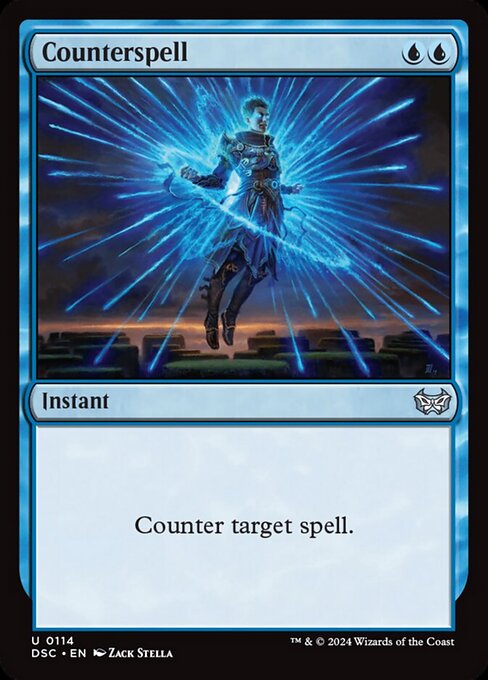

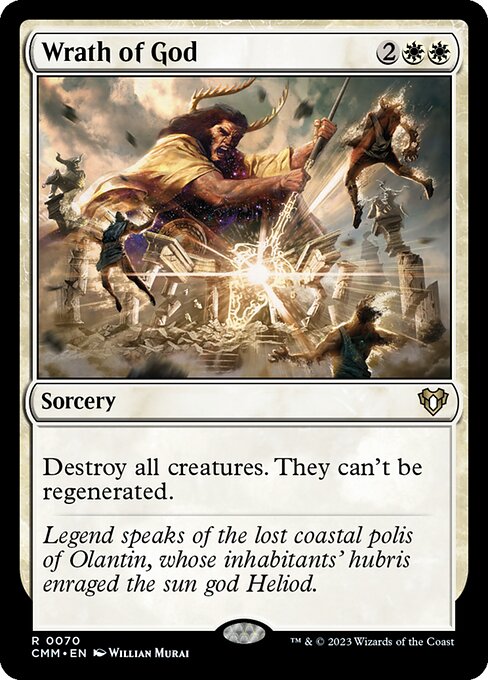
Blue and white are the best colors to start with when building a control shell. Blue provides countermagic and card advantage, while white offers efficient removal and sweepers.
The core cards are almost always:
- 4x Counterspell
- 4x Swords to Plowshares
- 2–3x Wrath of God
The rest of the list is often heavily debated among players, since the metagame evolves more than people might expect, sometimes even from one tournament to the next, depending on what wins and what becomes popular.
For example, for a long time, Standstill was considered strictly worse than Accumulated Knowledge, mostly because cards like Treetop Village and Mishra’s Factory were among the strongest threats in the format. During the first weeks of Premodern on Magic Online, a new UW Control shell emerged that played no manlands and no Standstill, instead relying on four copies of Accumulated Knowledge alongside a more stable, Wasteland-resistant manabase.
Now, however, with Mono Black Moneyball becoming one of the most played decks, relying on Accumulated Knowledge can be risky. In fact, the best-performing control list at the North American Premodern Championship played four copies of Standstill.
Win conditions also vary from list to list. Personally, I love playing Decree of Justice because it has one of the highest floors of any control finisher. Even when it’s not ending the game immediately, it still cycles well and provides value. I’ve also seen lists using Exalted Angel.
I’m personally less enthusiastic about Exalted Angel because it often turns otherwise dead removal spells back on for the opponent. That said, the card can be extremely powerful in decks that want to control the game while applying pressure with flying creatures, such as The Solution, which I’ll talk about later.
UW Control generally performs very well against grindy midrange decks like The Rock, Goblins, and BW Control. Its tougher matchups are Burn and Storm variants, although none of them are truly unwinnable if the control player has a strong sideboard plan.
UW Control is truly the “49% win-rate deck,” where pilot skill is what turns that number into 51%.
-
1Powder Keg

-
4Counterspell

-
3Disenchant


-
2Fact or Fiction

-
4Impulse
-
4Mana Leak
-
2Prohibit
-
4Swords to Plowshares
-
3Decree of Justice

-
2Wrath of God
-
1Humility
-
4Standstill
-
4Adarkar Wastes
-
1Coastal Tower
-
2Dust Bowl
-
1Faerie Conclave
-
4Flooded Strand
-
5Island
-
1Kor Haven
-
4Mishra's Factory
-
4Plains
-
4Annul
-
2Black Vise
-
4Blue Elemental Blast
-
1Circle of Protection: Red
-
2Teferi's Response
-
2Thawing Glaciers


Lock Control Decks
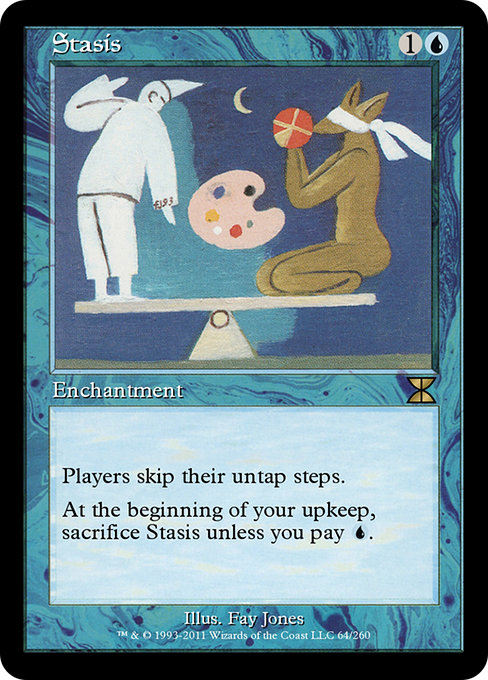
I already talked about Stasis in a previous article, but in short, Stasis is a very tricky control deck that tries to lock the opponent out of the game.
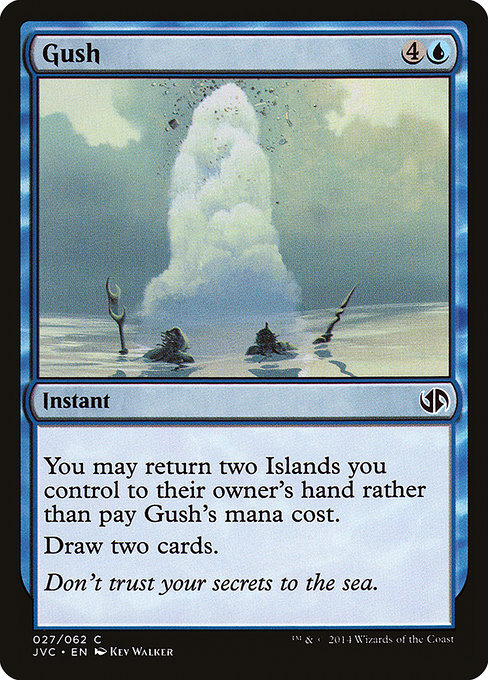
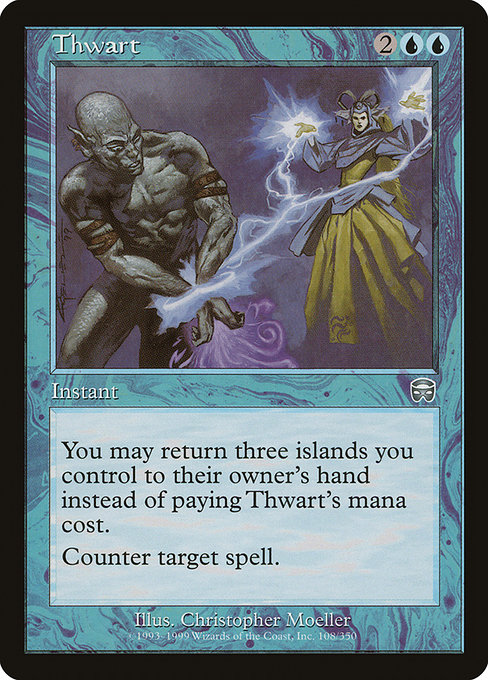
The deck abuses the symmetrical effect of skipping the untap step by using cards like Gush and Thwart, allowing the pilot to keep making land drops and interacting while the opponent stays frozen. Eventually, the Stasis player can Chain of Vapor their own Stasis, untap with a huge amount of mana, and take complete control of the game.
This “one-sided fun” gives the deck a lot of strong matchups, mostly because many strategies struggle to fight through multiple Counterspells, and experienced Stasis players can realistically compete against almost anything.
Of course, Stasis being an enchantment means it is vulnerable to cards like Naturalize and Disenchant, which are often already present in maindecks. The deck can also struggle against problematic permanents that enter the battlefield early and slip through before the lock is established.
Still, aside from specific cards like Quirion Ranger, I believe the deck is extremely powerful. It’s also a great way to learn the format and improve your overall Magic skills, since the deck rewards careful planning and tight play.
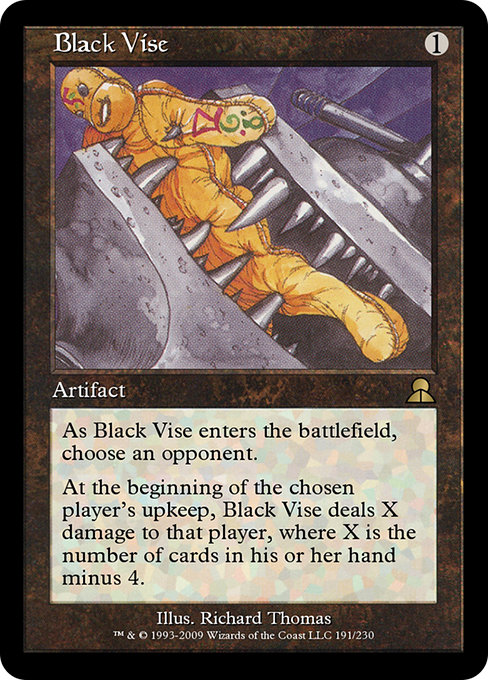
Stasis usually wins the game in two ways. The first is Black Vise, which can sometimes win games almost by itself, especially in control mirrors where both players tend to keep large hands. Having two Black Vises in play can become terrifying very quickly. The second win condition is Brain Freeze, which helps in strange scenarios where the opponent gains infinite life, yes, that’s actually something you can do in PreModern, or when they simply have too many answers for Black Vise.
Over time, skilled Stasis players have started adding clever one-of cards to solve specific problems. Cards like Upheaval can answer a Wild Mongrel that would otherwise invalidate the Black Vise plan, while Cephalid Coliseum can immediately finish the opponent after a large Brain Freeze.
And yes, I’ve even seen games involving Serra Avatar.
-
4Black Vise
-
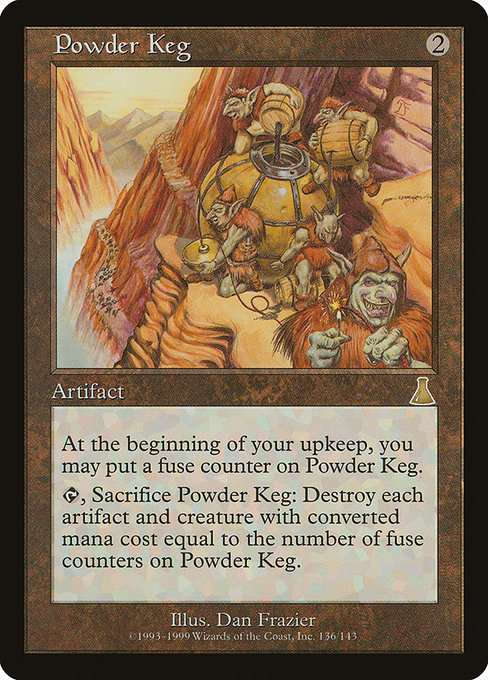
2Powder Keg
-
1Tsabo's Web
-
4Chain of Vapor
-
4Gush

-
4Impulse
-
3Thwart
-
3Arcane Denial
-
4Counterspell
-
2Daze
-
1Flash of Insight
-
1Upheaval
-
2Stasis
-
18Island
-
4Forsaken City
-
1Cephalid Coliseum
-
2Hibernation
-
2Hydroblast
-
2Blue Elemental Blast
-
2Brain Freeze
-
1Flash of Insight
-
1Chill
-
2Cursed Totem
-
1Annul
-
2Wall of Tears
Now we get to the “trash or treasure” section of the article.
Brew Standstill
I recently discovered this sweet deck after losing to it in an MTGO league, and of course I immediately had to try it myself.
-
1Enlightened Tutor
-
4Prismatic Lace
-
4Swords to Plowshares
-
4Accumulated Knowledge
-
4Counterspell
-
3Gaea's Blessing

-
3Impulse
-
2Intuition
-
1Decree of Justice
-
3Foil
-
1Tsabo's Web
-
1Seal of Cleansing
-
1Standstill
-
4Spirit of Resistance
-
3Adarkar Wastes
-
4Flooded Strand
-
11Island
-
2Plains
-
2Treva's Ruins
-
2Yavimaya Coast
-
1Tormod's Crypt

-
1Cursed Totem
-
4Meddling Mage
-
1Sacred Ground
-
1Seal of Cleansing
-
1Spiritual Focus
-
1Tsabo's Web
-
1Aura of Silence
-
2Decree of Justice
-
2Exalted Angel
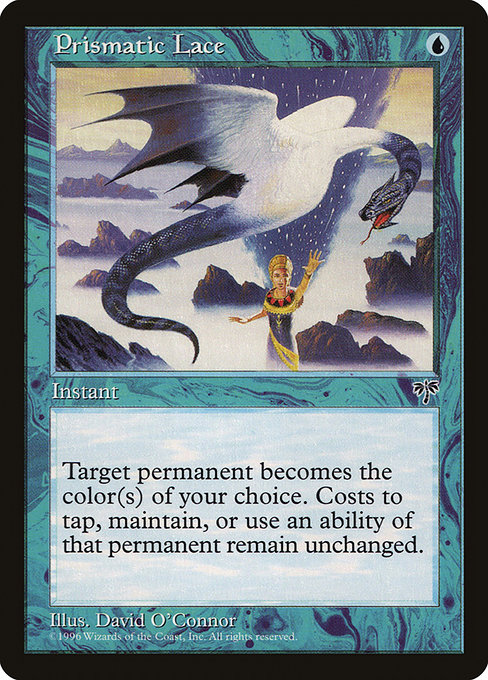
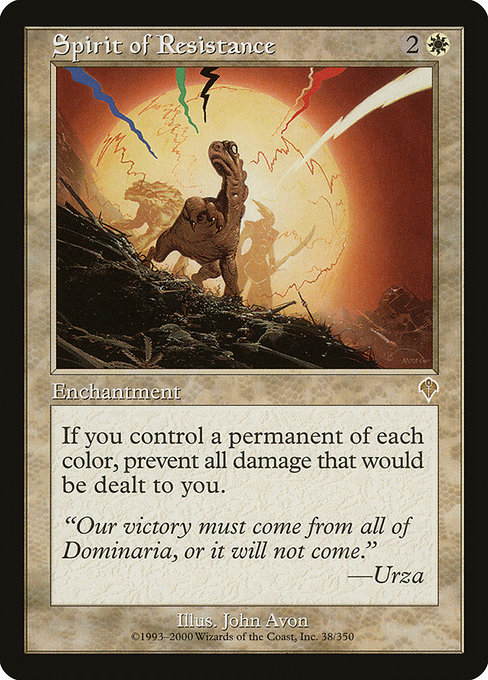
The core idea is that Prismatic Lace combined with Spirit of Resistance can create a lock that prevents you from taking damage for the rest of the game. Once the lock is established, your main concern becomes avoiding decking yourself.
Outside of the combo, the deck plays very much like a classic UW Landstill shell, using cards like Swords to Plowshares and Counterspell to control the game.
I honestly have a feeling this strategy might be secretly broken, mostly because many decks simply cannot interact with what it’s doing and can lose on the spot. On top of that, the deck is filled with strong standalone cards and plenty of ways to find the combo pieces, such as Impulse and Intuition.
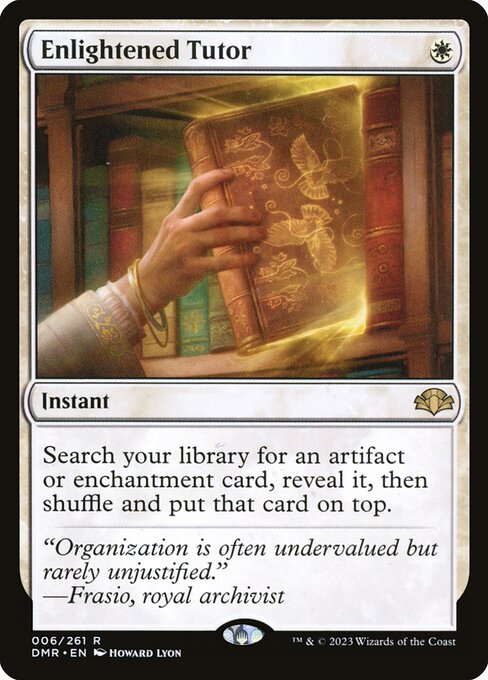
The sideboard is also extremely interesting, featuring a toolbox of enchantments searchable with Enlightened Tutor, alongside additional cards that help prevent losing under unusual circumstances.
At least on MTGO, it seems that most of the deck’s results come from the player EvanC, and I’m really curious to see how the archetype evolves in the future.
Control decks based on creatures - “the solution”
As I often say, in Premodern the threats are weaker than the answers. But what happens when the “answers” themselves become threats?
That’s exactly what The Solution tries to prove.
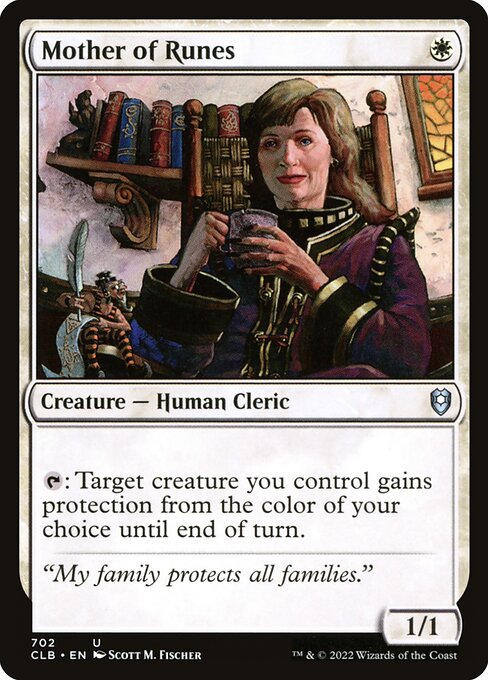
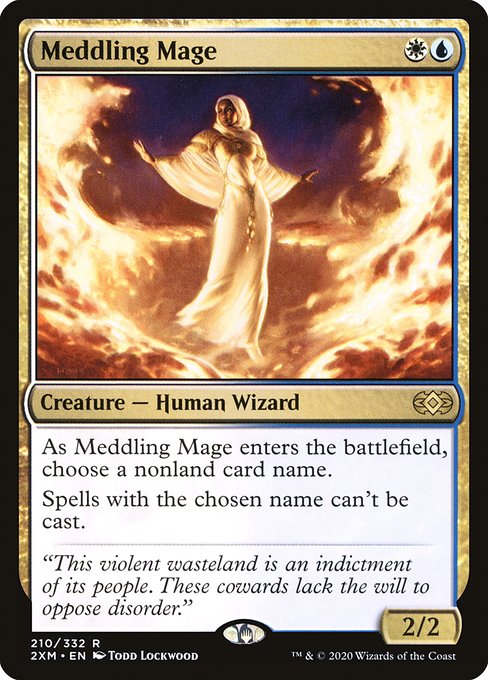
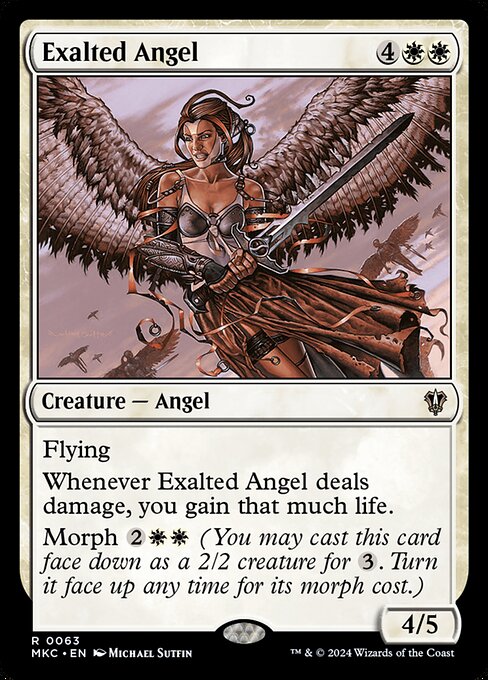
The deck combines some of the strongest interaction spells in the format, yes, once again we’re talking about Counterspell and Swords to Plowshares, with a package of cheap but extremely disruptive creatures such as Mother of Runes, Meddling Mage, and Exalted Angel.
-
4Meddling Mage
-
2Exalted Angel
-
3Mother of Runes
-
4Lightning Angel

-
2Mana Leak
-
2Miscalculation
-
4Lightning Bolt
-
2Counterspell
-
2Fact or Fiction
-
2Impulse
-
4Swords to Plowshares
-
3Portent
Unlike traditional UW Control decks that aim to dominate the late game with card advantage and inevitability, The Solution plays a much more proactive style. The deck wants to establish a creature early, protect it, and then slowly deny the opponent the ability to execute their game plan.
Mother of Runes makes combat and removal awkward, Meddling Mage can completely shut down key cards or combo pieces, and Exalted Angel quickly takes over games if left unanswered. Even a single Angel hit can completely swing a race thanks to the life gain.
What makes the deck particularly strong is how efficiently it can pressure opponents while still holding up interaction. It’s very common for The Solution player to attack with a creature while keeping mana open for Counterspell, Fire // Ice, or Lightning Bolt, forcing the opponent into extremely uncomfortable turns.
The red splash gives the deck an important amount of flexibility. Lightning Bolt helps close games quickly and punishes greedy keeps, while Fire // Ice is one of the most versatile cards in the format, functioning as removal, tempo, or even card draw depending on the situation.
Some versions also play Lightning Angel. Personally, I think the card is a bit of a relic from older versions of the archetype, but it can still be surprisingly effective, especially against decks built around Lightning Bolt. A hasty 3/4 flying vigilance creature can end games very quickly when the opponent is already stumbling under pressure.
The Solution tends to perform very well against combo and slower blue decks because it can apply pressure while disrupting key cards at the same time. On the other hand, highly aggressive creature decks can sometimes overwhelm it if the early interaction lines up poorly.
Overall, the deck perfectly represents one of the core identities of Premodern, efficient answers turning into a legitimate win condition.
Unconventional control decks
Premodern is still, at some level, a brewers paradise. This means a deck like Domain Control, a five color strategy trying to exploit the domain spells such as Evasive Action and Global Ruin, can 6-0 a tournament.
The goal of the deck is to control the game with powerful spells, while gradually assembling Domain and eventually closing the game with a massive Decree of Justice or Global Ruin. Two copies of Gaea’s Blessing ensure you don’t deck yourself, which is a real concern given the combination of 3 Fact or Fiction and 4 Accumulated Knowledge.
This list shows a surprising amount of ingenuity and a deep understanding of the format. Almost every card feels purposeful and impactful. Even though the manabase looks somewhat sketchy at first glance, the brewer compensates with 4 Chromatic Sphere and 2 Rampant Growth to smooth things out and reduce consistency issues.
The sideboard becomes even more intricate, featuring Enlightened Tutor alongside a toolbox of silver bullet enchantments tailored for the most common matchups. Cards like Warmth and Sphere of Law are included for Burn, Aura of Silence helps against strategies like Aluren, Replenish, and Enchantress, while Sacred Ground is a key piece against land destruction strategies such as Terrageddon.
I’m not 100% sure about the role of Sliver Queen in the list, but beyond being an iconic and extremely fun card to include, it likely serves as a win condition in control mirrors, where both players tend to trim down on removal and games often go long.
BUG Control
The last deck I am going to cover is one of my favourite deck from when I started the format, and that I am always happy to see played (and play myself): BUG Control.
What I like about this deck is that it has more “true control” elements compared to UW.
Duress is excellent in a format dominated by Stiflenought and Replenish, where stripping key combo pieces early can completely change the game. Pernicious Deed provides a flexible answer to problematic permanents that are often difficult to handle with traditional Wrath of God effects. Diabolic Edict is also a valuable tool, especially against threats that are hard to remove with cards like Smother, such as Exalted Angel. Wall of Blossoms acts as early defense while replacing itself immediately, helping smooth out draws without costing card advantage. Grizzly Fate, on the other hand, serves as a surprisingly powerful win condition, turning the late game into a flood of inevitability.
The sideboard also features an interesting transformational plan into an Oath strategy against decks that try to go wide on the battlefield. In those matchups, Goblins in particular can struggle to handle threats like Akroma and Nishoba once they come down.
The main weakness of the archetype, aside from the relatively small number of players iterating on it, is the manabase. It is often painful and somewhat unstable, and the color requirements can be demanding, especially without access to fetchlands like Verdant Catacombs or Misty Rainforest.
Still, I’m very curious to see whether BUG Control gets more exploration in the future. It feels both fun and potentially very powerful, and there is definitely room for further refinement.
I hope this article brought you some new information or sharpened your ideas on control decks in Premodern! I know there are many more decks down the line, and I am happy to explore the format: you can check my videos on Twitch.tv/PieGonti and the VODS on PieGontiVOD on YouTube.
Thanks for the read.