

Reality Fracture Prerelease Guide: Archetypes, Mechanics, and Best Cards


Reality Fracture Booster Breakdown
To give you an idea of what to expect, here is the Play Booster breakdown for Reality Fracture:
- 6 Commons, with one replaced by a Special Guests card in 1 out of 55 boosters
- 1 Uncommon
- 1 Common or Uncommon
- 3 Echoed-pair cards, including one matching pair of the same rarity
- 1 Rare or Mythic Rare
- 1 Traditional foil card of any rarity
- 1 Non-foil or traditional foil land, either a basic or common dual land
That’s 14 playable cards, plus a token or punch-out counter card. The echoed-pair slots can contain uncommons, rares, or mythics. Each booster has one complete echoed pair and one non-complete to make it not obvious what you took in limited.
In addition to the regular rare or mythic slot, there are also echoed pairs, foils, and special guests. This means that in Play Boosters, you can get up to 4 rares or mythics per pack.
What does that mean in practice? Magic is a lot more about uncommons and rares these days, while commons make up only about half of each booster pack. Prioritize power over speed and curving out, especially in Sealed.
Limited Archetypes

Above, you can find the limited archetypes in this set. There is a lot going on and we are back to the 10 supported color-pairs.
Knowing what kind of synergy each archetype is built around really pays off in helping you understand what cards to look for and how to evaluate them in the context of the format.
Azorius
White/Blue is based around surveil and flying creatures. The main synergy is getting rewarded for surveilling, with the themed prepared spell being “Peer Review”. White has a lot of removal and blue offers card selection and creatures with evasion. The easiest source of surveil are Jace tokens (more on the Empower Jace mechanic later!).
Dimir
Blue/Black is based around self-mill, with Omit Variables as the themed prepared spell. Your goal is to get to seven cards in the graveyard to enable threshold and get more value from your cards. Look for graveyard synergies like flashback or recursion.
Rakdos


Black/Red is an aggressive color combination based around dealing noncombat damage to your opponent. This archetype can be extremely fast. Vicious Verse is the theme prepared spell here, enabling bonuses such as flying, haste, or returning cards from the graveyard. As usual, black and red are the two colors with the most removal spells. An unfocused low-curve deck might not always be the best choice for a Sealed event, so make sure your deck has enough late-game power as well.
Gruul
Red/Green is based around ramping up your mana with Hearthwood tokens and casting expensive threats. I like this type of strategy at the prerelease quite a bit because the environment is naturally much slower than Draft and you have plenty of time to develop and cast your game-winning threats. Soul Tether is the themed prepared spell here. There are plenty of mana-producing creatures as well, so even if you are low on Hearthwood tokens, you should have no issues finding other mana-producing permanents. Don’t be afraid to put multiple six or seven-mana cards into your deck because the games will drag on, and especially the land-cyclers are very good and flexible.
Selesnya
Green/White is based around life gain and +1/+1 counters. Historically speaking, building your deck around gaining life has not always been the most powerful strategy, but with Seed Suture as the themed prepared spell, payoff cards like Bloombrute or Lyra, Archangel of Dawn can absolutely dominate the game. Look for repeatable life gain sources like Koth of the Homestead or Greenhouse Propagator.
These are the main five supported color pairs with a shared, themed prepared spell. The enemy color pairs are supported as well, but with other mechanics.
Izzet
Blue/Red is based around prowess and getting value from casting noncreature spells. Look for payoff creatures like Chandra’s Emberling and cheap enablers like Artifist Acumen. The prepare spells like Vicious Verse are also great support for this archetype. This type of deck usually needs a very tight balance of payoffs and enablers.
Golgari
Black/Green is based around creatures, value and graveyard synergies and recursion. Removal, mana acceleration and big creatures are always a good recipe for Sealed. Deathtouch creatures synergize well with fight spells. Look for self-mill effects in combination with payoff cards like Hapatra, the Desert Fang.
Boros


Red/White is based around early creatures and +1/+1 counters. Look for cheap creatures, cards that create multiple bodies and ways to distribute counters. Try to keep the curve low and keep a high creature count.
Simic
Blue/Green is based around empowering Jace and getting repeated value from him. Jace provides card selection while value creatures like Mindseeker Oculus and Arcane Amphisbaena keep the card advantage flowing while protecting the planeswalker. Green provides larger threats, mana acceleration and removal.
Orzhov
White/Black is based around attrition, which in practice means outlasting your opponent by trading resources like creatures and getting additional value from the graveyard. Look for small creatures with useful “enters the battlefield” effects or “dies” triggers. The goal is to keep rebuilding while the opponent runs out of resources.
New Mechanics in Reality Fracture
Empower Jace
The Empower Jace mechanic is featured on 35 cards, including 11 commons, so it plays a large role in this set. Empower Jace X means that you get a Jace planeswalker token, or add X loyalty counters on an already existing one, with the following abilities
-1: Surveil 1
-3: Draw a card
This is going to give you a lot of options every turn and it means that even a token with 1 loyalty is going to net you value.
Surveil also synergizes well with other returning mechanics in this set like Flashback and Threshold and sets you up for some graveyard shenanigans.
How valuable is surveil 1? Technically speaking, it costs a third of the activation cost of drawing a card. In practice, I’d say the impact on the game of drawing 1 random card is much less than surveilling 3 times, so it depends on the situation and the stage of the game.
Limited is a game of resources. Make sure to plan ahead carefully to extract as much value from your Jaces as possible. There are even cards that will put a Jace token into play at instant speed, like Academic Ascent, so think twice about whether you want to leave something behind to protect your planeswalker.
A good rule of thumb is that if you are not dealing lethal, it is usually better to attack their planeswalker and deny them free resources.
The fact that the set is centered so much about Empowering Jace means that games typically go much longer than normal since a lot of attacks end up being aimed at the planeswalker. If you are coming off playing a lot of Hobbit limited, you will need to adjust your expectations on the speed of the format and keep in mind that the games can drag on and be decided by cards that cost 5 or more mana.
Prepare
Prepare is a returning mechanic from Secrets of Strixhaven and features creatures that enter the battlefield prepared, ready to cast a prepare spell in the right part of the text box, similar to Adventures.
Once you do that, the creature becomes unprepared. The twist is that at common and uncommon, every school has just one prepared spell shared across all the creatures. There is more variety at higher rarities.
Heartwood Tokens
Heartwood tokens are pretty simple; they are artifacts that tap for red or green mana. It is something you will encounter in Red and Green and it’s a good way to get ahead on mana and cast more expensive cards ahead of the curve.
This Sealed format is quite slow and grindy, so you should have plenty of time to ramp into big threats.
There are many other returning mechanics like Landfall, Threshold and Flashback that support individual archetypes, while Empower Jace is a central theme shared across all five colors.
Tips and Tricks for Reality Fracture Prerelease
For general tips and tricks, I recommend reading this article here!
- 75 out of 160 creatures in this set are Legendary, which is about 47%. Be careful to not end up like me at the Hobbit prerelease, and realize that you have two of the same legendary creature sitting in play, having to bin one, and losing the game as a result. Luckily, at least the land cyclers are not legendary anymore, so this should happen less often than before, but keep in mind that even common creatures can be legendary these days and it is not something reserved only for the high rarities.
- There are some neat tricks you can do with the spells in this format that buff creatures, like Predictive Preparations or Seed Suture. You can target your opponent’s creatures as well, which can make cards like Surgical Precision suddenly able to deal with their best creature, or buff their Tetsuko Umezawa, Fugitive, so that she is no longer unblockable.
- Unlike The Hobbit, this Sealed format will be slow and grindy. You can definitely put together a fast deck in draft, most likely something like Red/Black that has a lot of cheap creatures and direct damage to close out games, but in Sealed it is much harder to put together a focused aggressive strategy. When building your deck, if you are not sure, go for a deck that features more powerful cards over one that feels like it can go under your opponent. Look for cards that break parity. The games will go long, and boards will become stalled. Powerful six and seven mana cards are not only playable, I would even say they are desirable to have in this format.
- The way you get ahead in this format is by slow incremental advantages. Sequence carefully, make sure you get the most value out of your Jaces, protect them and attack theirs if you are not going for lethal damage. Get ready for long games.
- The "Way of the Planeswalker" enchantments are almost all extremely good. Not only do they come with a planeswalker, they typically add a way to protect it. My favorite is Way of the Pyromancer, which gives you a Jace token at the price of just two mana and even give it an ability to add loyalty counters by adding mana every turn!
Mana Curve
1 Mana: 1 - 2 cards
2 Mana: 6 - 7 cards
3 Mana: 6 - 7 cards
4 Mana: 4 - 5 cards
5 Mana: 2 - 3 cards
6+ Mana: 1 - 2 cards
17 lands
The most important part of deckbuilding is making sure you have a functional mana curve. You might have the biggest bombs in a certain color combination, but if your curve starts on 4 and you don’t have any cheap cards to play in the early turns, you will get overrun before you can use all your powerful cards.
Above you can find an approximate illustration of a good mana curve. It is fine to make concessions here or there, but as a general approach try to make sure you have enough creatures or interaction to do something in the early turns.
Each deck will be different, but I like to make sure my deck has at least 14-15 creatures.
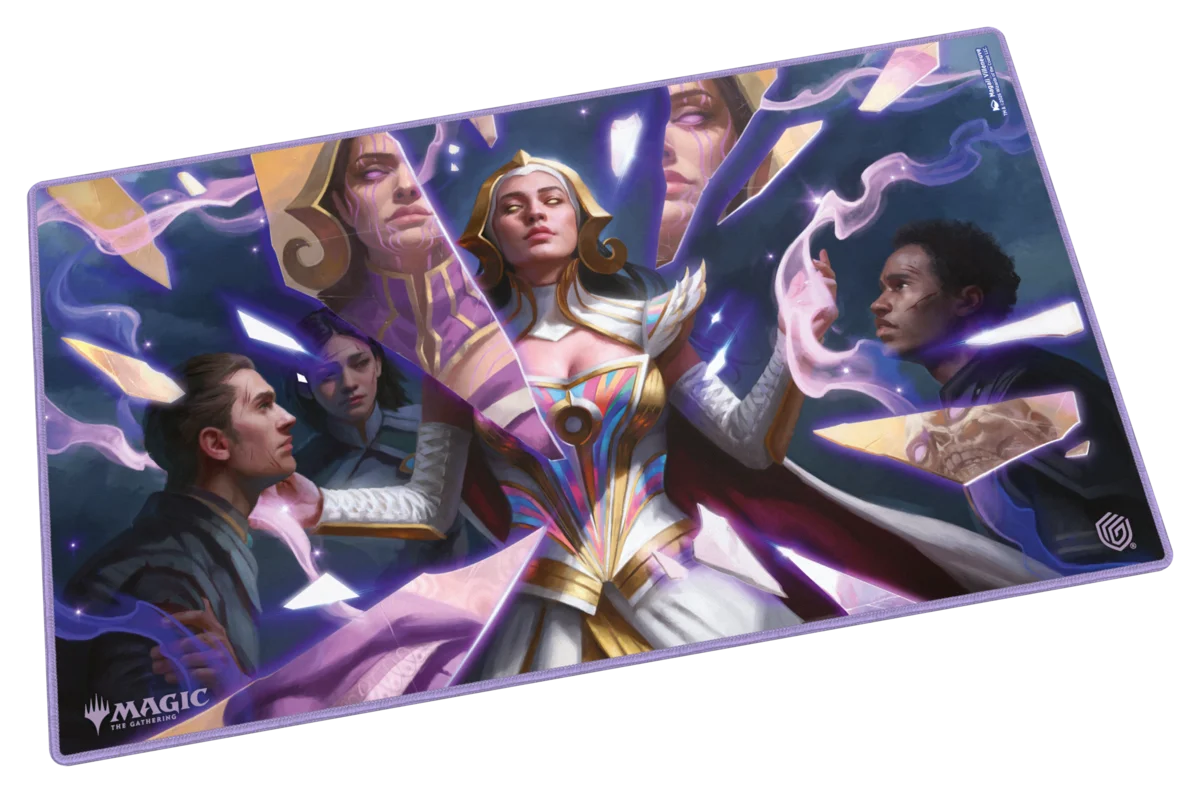
That’s it for today. Best of luck at the prerelease and make sure to check out our new official Reality Fracture product line featuring the iconic card arts on products like Sidewinders, Art Sleeves, Zipfolio Binders, Playmats, Squaroes and Boulders and an Omnihive!